Lymphoma Treatment in Bangalore
Lymphoma is a blood cancer that starts in lymphocytes, the infection-fighting white blood cells of the lymphatic system. It often first shows as a painless swelling in the neck, armpit or groin. Lymphoma is one of the most treatable cancers, and many types can be cured, especially when found early.
Overview
What is lymphoma?
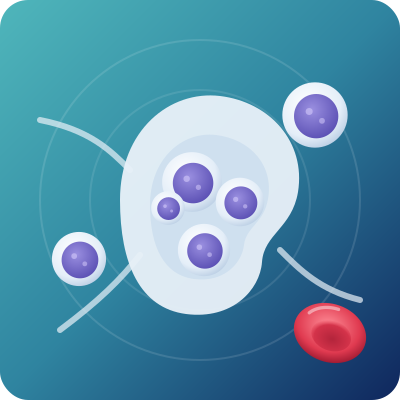
Your lymphatic system is part of your immune system. It includes the lymph nodes (glands), spleen, thymus, tonsils and bone marrow, connected by thin tubes that carry a fluid called lymph. It helps your body fight infections.
Lymphoma starts when lymphocytes (B cells, T cells or NK cells) change and grow out of control. These abnormal cells collect in the lymph nodes and other organs, causing swelling. Lymphoma can also start in, or spread to, organs outside the lymph nodes, such as the stomach, skin, brain or bone marrow.
The right lymphoma treatment in Bangalore starts with knowing the exact type. Dr. Neema Bhat, a US-trained hematologist and bone marrow transplant specialist with 10+ years of experience, treats all types of lymphoma in adults and children.
The two main groups
- Hodgkin lymphoma: has a special abnormal cell called the Reed-Sternberg cell. It is common in young adults and has very high cure rates.
- Non-Hodgkin lymphoma (NHL): a large group of more than 60 subtypes. Some grow slowly (indolent), while others grow fast (aggressive) but often respond well to treatment.
About 55,300 people in India were diagnosed with lymphoma in 2022: about 11,700 with Hodgkin lymphoma and 43,600 with non-Hodgkin lymphoma (National Cancer Registry Programme, ICMR). Swollen glands are often mistaken for an infection or tuberculosis. If a lump does not go away, timely lymphoma treatment in Bangalore can make a big difference.
Signs & symptoms
Common signs of lymphoma
The most common sign is a painless swelling of the lymph nodes. Watch for:
- Painless lumpIn the neck, armpit or groin that does not go away after 2 to 3 weeks
- Recurring feverFever that keeps coming back without an infection
- Night sweatsHeavy sweats that soak your clothes or bedsheets
- Weight lossLosing weight without trying
- TirednessConstant tiredness or weakness
- ItchingItching all over the body
- Cough or breathlessnessCough or chest pain, from swollen glands in the chest
- Swollen tummyOr pain in the upper left side, from an enlarged spleen
- Poor appetiteLoss of appetite or feeling full quickly
- Frequent infectionsInfections that keep coming back
Fever, drenching night sweats and weight loss of more than 10% in 6 months are called B symptoms. They help doctors stage the lymphoma and plan treatment.
Lymphoma symptoms in children
Children may have swollen glands in the neck, a swollen tummy, cough or breathing difficulty, fever or tiredness. Dr. Neema Bhat is a US board-certified pediatric hematologist-oncologist, so children with lymphoma get specialised care.
See a doctor urgently
If you have sudden breathlessness, swelling of the face, neck or arms, severe tummy pain, weakness in the legs, or high fever with chills.
What causes lymphoma and who is at risk?
In most people, the exact cause is not known. It starts with changes (mutations) in the DNA of a lymphocyte. Lymphoma is not contagious. The risk is higher for:
- Age: Hodgkin lymphoma is more common in young adults (15 to 35) and in people over 55. Most non-Hodgkin lymphomas are more common after 60.
- Men, who get lymphoma slightly more often than women
- Weak immune system: HIV infection, organ transplant patients, or people taking long-term immune-suppressing medicines
- Autoimmune diseases: such as rheumatoid arthritis, lupus, Sjogren’s syndrome and celiac disease
- Certain infections: Epstein-Barr virus (EBV), Helicobacter pylori (stomach), hepatitis B and C, and HTLV-1
- Family history: a parent, brother or sister with lymphoma
- Chemical exposure: long-term exposure to some pesticides, herbicides and solvents
- Previous cancer treatment with chemotherapy or radiation
Most people with these risk factors never get lymphoma, and many people with lymphoma have no known risk factor.
What happens if lymphoma is left untreated?
Aggressive lymphomas can grow within weeks, and even slow-growing types can change over time. Without treatment, lymphoma can cause:
- Spread to other organs: such as the liver, lungs, bone marrow, brain or spinal cord.
- Pressure on vital structures: swollen glands in the chest can press on the windpipe or a large vein (superior vena cava syndrome), causing breathlessness and face swelling.
- Bone marrow failure: low blood counts lead to anemia, infections and bleeding.
- Serious infections because the immune system is weakened.
- Kidney problems: from blocked urine flow or from fast-growing lymphoma cells breaking down (tumour lysis).
- Fewer treatment choices and a lower chance of cure.
The good news: most lymphomas respond well to treatment, and many people are cured when treatment starts early.
Types
Types of lymphoma we treat
| Type of lymphoma | What it means in simple words |
|---|---|
| Classical Hodgkin lymphoma | The most common type of Hodgkin lymphoma. Often affects young adults and is usually curable. |
| Nodular lymphocyte-predominant Hodgkin lymphoma | A rare, slow-growing type of Hodgkin lymphoma. |
| Diffuse large B-cell lymphoma (DLBCL) | The most common non-Hodgkin lymphoma. Grows fast but is often curable. |
| Follicular lymphoma | A common slow-growing lymphoma. Can often be watched or treated gently for years. |
| Mantle cell lymphoma | A less common type that can be slow or fast-growing. |
| Marginal zone and MALT lymphoma | Slow-growing types. MALT lymphoma of the stomach is often linked to H. pylori infection. |
| Burkitt lymphoma | A very fast-growing type, more common in children and young adults. Needs urgent treatment and is often curable. |
| Small lymphocytic lymphoma (SLL) | The lymph node form of chronic lymphocytic leukemia (CLL). Usually slow-growing. |
| T-cell and NK-cell lymphomas | Less common types, including peripheral T-cell, anaplastic large cell and NK/T-cell lymphoma. |
| Lymphoblastic lymphoma | A fast-growing type, mostly in children and teenagers, treated like leukemia. |
| Primary CNS lymphoma | Lymphoma that starts in the brain, spinal cord or eyes. |
| Lymphoma in children | Specialised care for Hodgkin, Burkitt, lymphoblastic and anaplastic large cell lymphoma in children. |
Stages of lymphoma
Doctors use the Lugano staging system to stage most lymphomas, based on where the lymphoma is found. Stage I and II are called early (limited) stage, and Stage III and IV are called advanced stage. Even advanced-stage lymphoma is often curable.
| Stage | What it means |
|---|---|
| Stage I | One lymph node area or one organ is affected. |
| Stage II | Two or more lymph node areas on the same side of the diaphragm (the muscle under the lungs). |
| Stage III | Lymph node areas on both sides of the diaphragm, or nodes above the diaphragm with the spleen. |
| Stage IV | Lymphoma has spread outside the lymph nodes, such as to the liver, lungs or bone marrow. |
Diagnosis
How is lymphoma diagnosed?
A biopsy is the only way to confirm lymphoma and find its exact type. Dr. Neema Bhat may advise:
- 01Physical examination
Checks the lymph nodes, liver and spleen.
- 02Lymph node biopsy
The whole node (excisional) or a core needle sample is removed and examined. A fine needle aspiration (FNAC) alone is usually not enough.
- 03Immunohistochemistry
Special stains on the biopsy identify the exact type of lymphoma.
- 04Flow cytometry
Studies the cells in blood, bone marrow or fluid samples.
- 05Cytogenetics, FISH & molecular tests
Find genetic changes that help classify the lymphoma and guide treatment.
- 06Blood tests
CBC, kidney and liver function, LDH, uric acid and beta-2 microglobulin.
- 07Viral tests
Hepatitis B, hepatitis C and HIV, which matter before treatment.
- 08PET-CT scan
Shows where the lymphoma is in the body and is used for staging and checking response.
- 09CT or MRI scan
Used in some cases, including for the brain and spine.
- 10Bone marrow biopsy
In selected cases, to check if lymphoma has reached the bone marrow.
- 11Lumbar puncture
In some fast-growing lymphomas, to check the fluid around the brain and spine.
- 12Heart and lung tests
An echocardiogram and lung function tests before treatment.
Treatment
Lymphoma treatment options
Treatment depends on the type of lymphoma, its stage, how fast it is growing, your age and your overall health. Some slow-growing lymphomas need no treatment at first, while fast-growing types need treatment straight away.
Watch and wait
Active monitoring for some slow-growing lymphomas with no symptoms, with regular check-ups and scans.
Chemotherapy
Anti-cancer medicines given in planned cycles, usually as a combination. Most cycles are given as daycare treatment.
Chemoimmunotherapy
Chemotherapy given together with a monoclonal antibody, the standard first treatment for most B-cell lymphomas.
Monoclonal antibody therapy
Antibodies that attach to markers on lymphoma cells, such as CD20. Also used as maintenance in some slow-growing lymphomas.
Targeted therapy
Medicines, often tablets, that block signals lymphoma cells need to grow, such as BTK inhibitors.
Antibody-drug conjugates
Antibodies that carry an anti-cancer medicine directly to lymphoma cells.
Immune checkpoint inhibitors
Immunotherapy that helps the immune system attack lymphoma cells, mainly for relapsed Hodgkin lymphoma.
Bispecific antibodies
Newer immunotherapy that links immune cells to lymphoma cells, for relapsed lymphomas, where suitable and available.
CAR-T cell therapy
The patient’s own immune cells are modified to attack lymphoma, for selected relapsed or refractory lymphomas.
Radiation therapy
Targeted radiation to affected lymph node areas, alone in early-stage disease or after chemotherapy.
Autologous stem cell transplant
High-dose chemotherapy followed by return of your own stem cells, for lymphoma that relapses or is high-risk. Learn more
Allogeneic (donor) stem cell transplant
For selected patients with relapsed or aggressive lymphoma.
Treating the infection behind it
For example, antibiotics for H. pylori in stomach MALT lymphoma, or antiviral treatment in hepatitis C-related lymphoma.
CNS prophylaxis
Treatment to prevent lymphoma from spreading to the brain in high-risk patients.
Supportive care
Prevention of infections and tumour lysis, hepatitis B protection, count-boosting medicines and transfusions when needed.
Fertility preservation counselling
Sperm or egg freezing before treatment for young patients.
Counselling & palliative care
Emotional support and symptom control for patients and families, at any stage of treatment.
Lymphoma treatment works best when the full course is completed. Do not stop or delay treatment because the swelling has gone down.
Living well during and after lymphoma treatment
These steps help you stay strong and lower the risk of problems during treatment:
- Check for fever: a temperature of 100.4°F (38°C) or more during chemotherapy needs urgent medical attention.
- Prevent infections: wash hands often, avoid crowds and sick people when counts are low, and take the vaccines your doctor advises. Live vaccines are usually avoided during treatment.
- Eat safe, healthy food: freshly cooked home food, enough protein (dal, eggs, paneer, curd, fish, chicken), fruits and boiled or filtered water.
- Drink plenty of fluids, especially in the first days of chemotherapy, to protect the kidneys.
- Stay gently active: walking and light exercise reduce tiredness.
- Look after your mouth and skin: use a soft toothbrush, and protect skin treated with radiation from the sun.
- Avoid smoking and alcohol, and check with your doctor before taking herbal or home remedies.
- Keep every follow-up appointment. Check-ups catch any relapse early and look for late effects on the heart, lungs, thyroid and fertility.
Lymphoma cannot usually be prevented. But a swollen gland, fever or weight loss that does not go away should always be checked early.

About the doctor
Dr. Neema Bhat
- SpecialityHematologist, Pediatric Oncologist & Bone Marrow Transplant Specialist
- EducationMD (USA) · Fellowship (FAAP) in Pediatric Hematology, Oncology & Bone Marrow Transplantation, Penn State Health, USA
Dr. Neema Bhat is a Haemato-Oncologist in Bangalore with more than ten years of experience treating blood disorders and blood cancers in children and adults. For lymphoma, she plans treatment around the exact subtype, stage and risk, not a one-size-fits-all approach.
FAQs
Quick answers to the questions patients ask most about lymphoma.
01Which doctor should I see for lymphoma in Bangalore?
A hematologist or hemato-oncologist (blood cancer specialist) treats lymphoma. Dr. Neema Bhat is a US-trained hematologist in Bangalore who treats all types of lymphoma in adults and children.
02Is lymphoma curable?
Many lymphomas are curable. Most people with Hodgkin lymphoma and many with aggressive non-Hodgkin lymphoma, such as DLBCL, are cured with treatment. Slow-growing lymphomas are usually not cured but can be controlled for many years.
03Does every swollen lymph node mean lymphoma?
No. Most swollen glands are caused by infections and go away in 2 to 3 weeks. A painless lump that stays, grows, or comes with fever, night sweats or weight loss should be checked by a doctor.
04How is lymphoma different from TB of the lymph nodes?
Both can cause swollen glands, fever and weight loss, so they are often confused in India. A proper biopsy tells them apart. Never start TB treatment without a confirmed diagnosis.
05What is the difference between Hodgkin and non-Hodgkin lymphoma?
Hodgkin lymphoma has a special cell called the Reed-Sternberg cell and usually spreads in an orderly way from one lymph node group to the next. Non-Hodgkin lymphoma is a larger group with many subtypes that behave differently.
06How long does lymphoma treatment take?
Most treatment is given in cycles every 2 to 3 weeks, for about 3 to 6 months. Some slow-growing lymphomas need maintenance therapy for longer, while others need only watching.
07Is chemotherapy the only treatment for lymphoma?
No. Many patients receive chemotherapy combined with immunotherapy. Radiation, targeted therapy, stem cell transplant and CAR-T cell therapy are also used, depending on the type and stage.
08Can lymphoma come back after treatment?
Yes, it can, especially in slow-growing types. Regular follow-up helps find it early. If it returns, many effective treatments, including stem cell transplant, are available.
09Can children get lymphoma?
Yes. Hodgkin, Burkitt and lymphoblastic lymphomas are seen in children and teenagers, and most children are cured with treatment. Dr. Neema Bhat is a US board-certified pediatric hematologist-oncologist.
10How much does lymphoma treatment cost in Bangalore?
The cost depends on the type of lymphoma, the medicines used, the number of cycles, and whether radiation or a transplant is needed. The clinic can share an estimate after your first consultation.
A lump that will not go away?
Fever, night sweats or weight loss without a reason? Get it checked by a blood cancer specialist. Book a consultation for lymphoma treatment in Bangalore with Dr. Neema Bhat today.
- +91 78997 56677 · Call or WhatsApp
Medical disclaimer: This page is for general information only and is not a substitute for medical advice. Please consult a doctor for diagnosis and treatment.